BRAK
Experimental ceramic animation & installation, 2026
Animation, 3:55 min
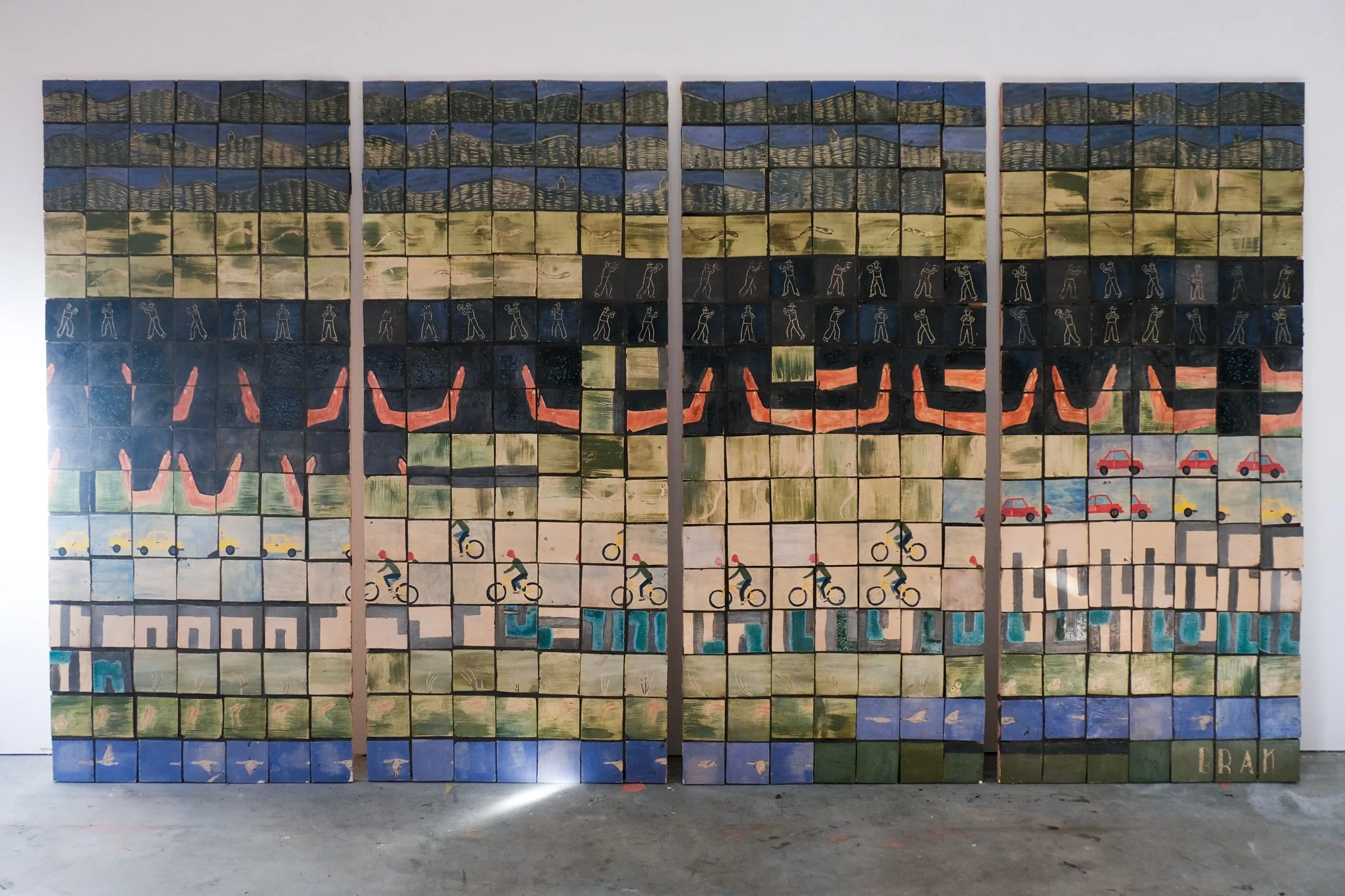
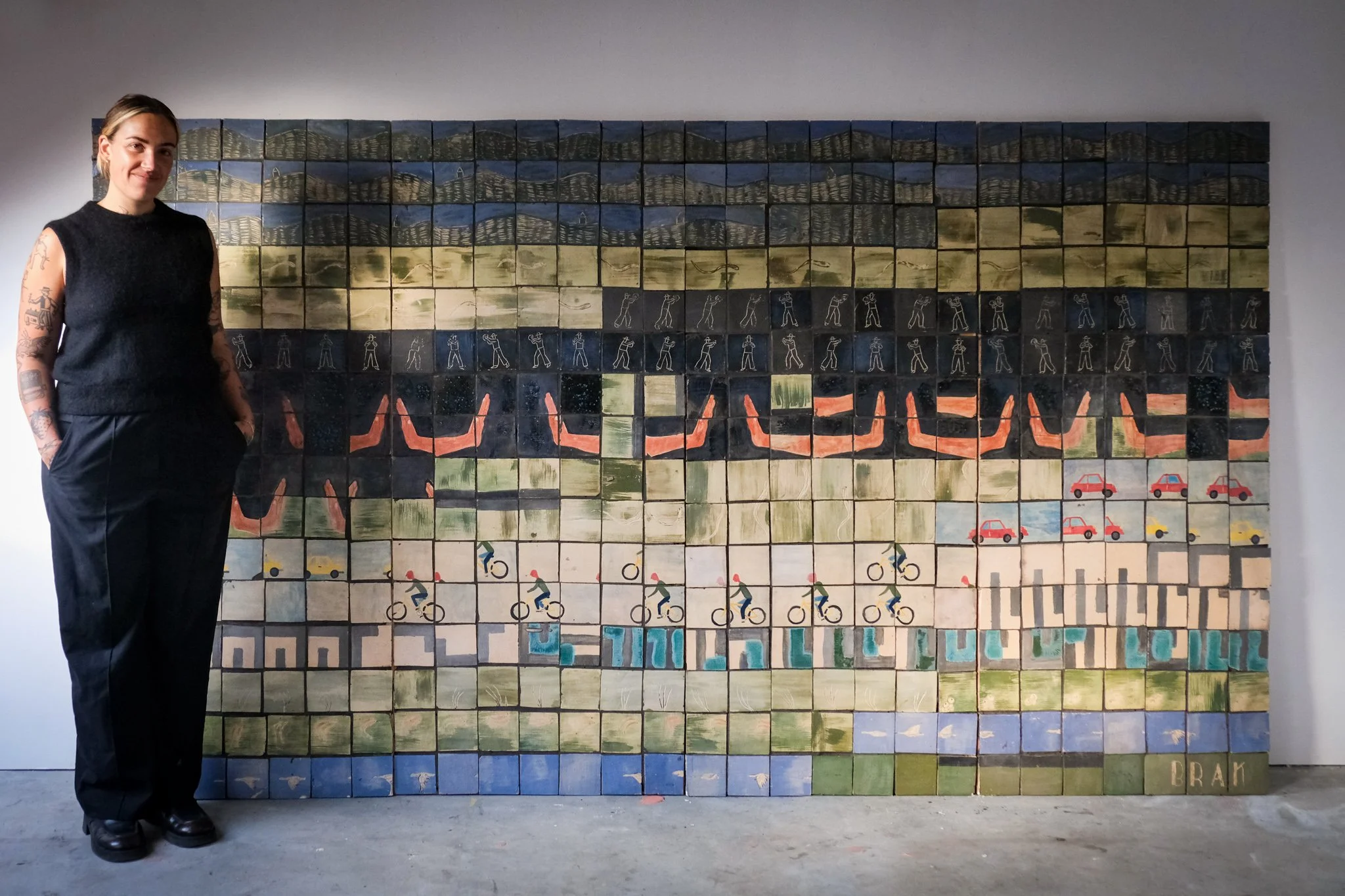
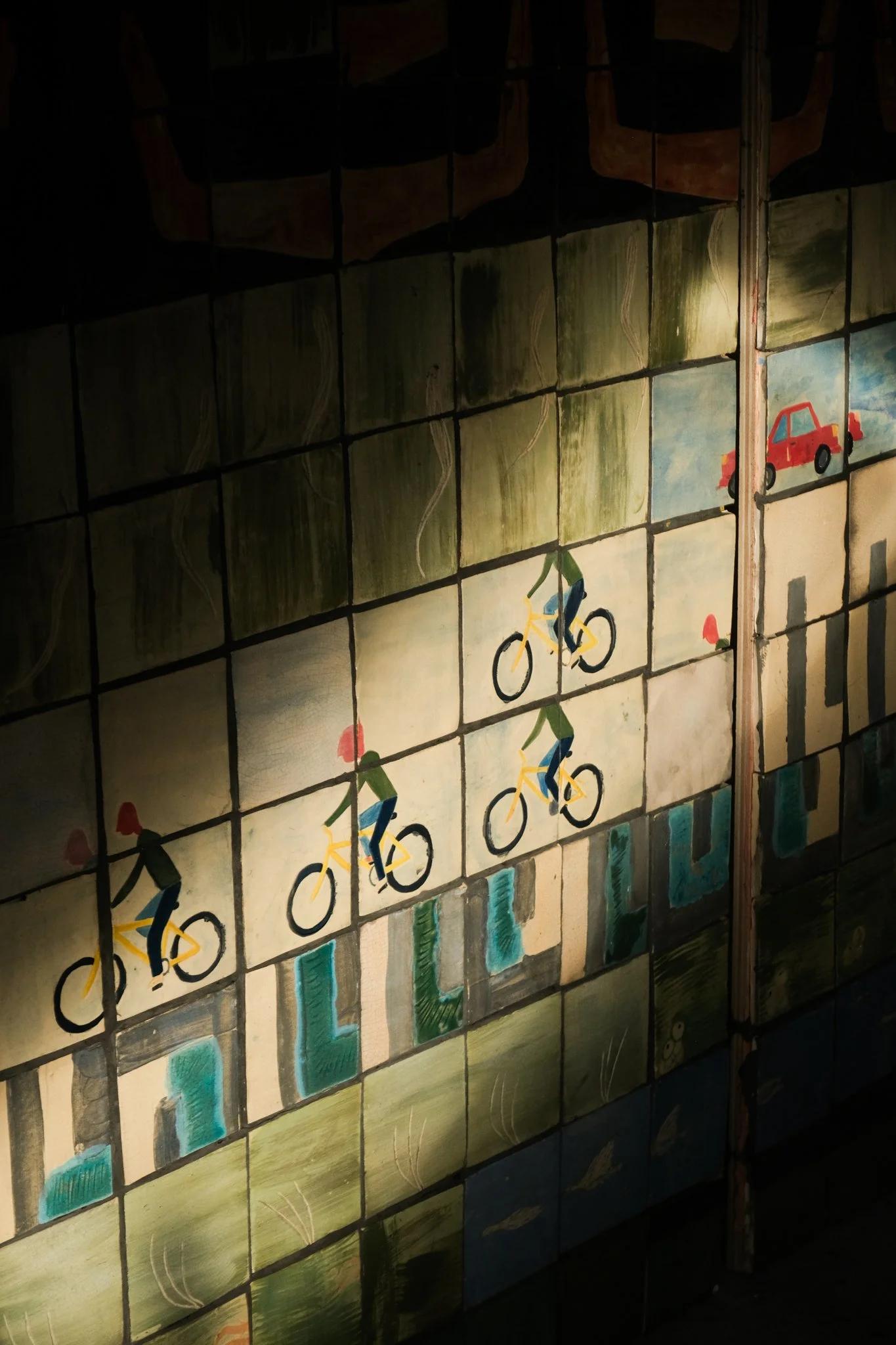
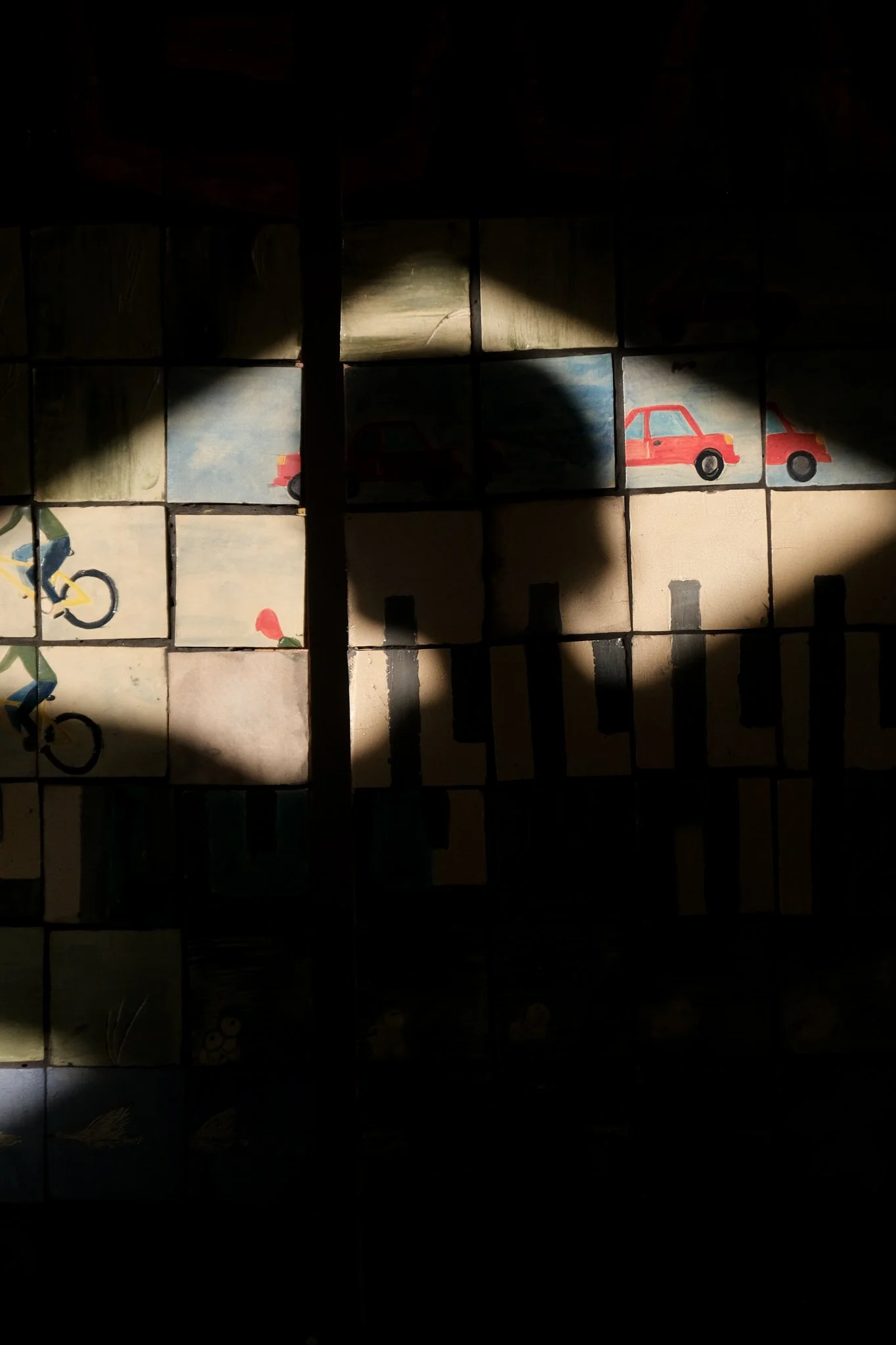
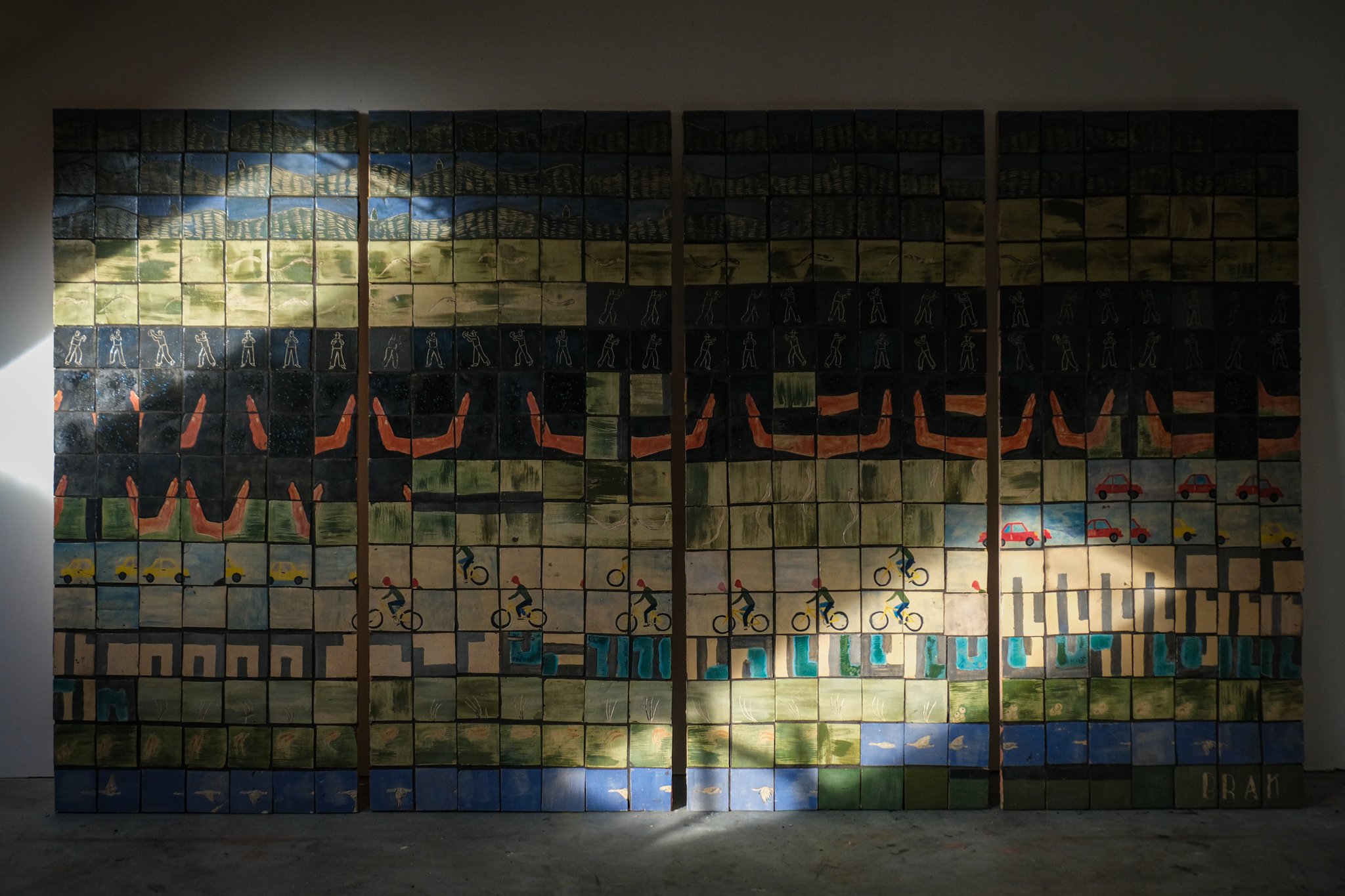
Hand-painted ceramic tile tableau, 180 × 300 cm
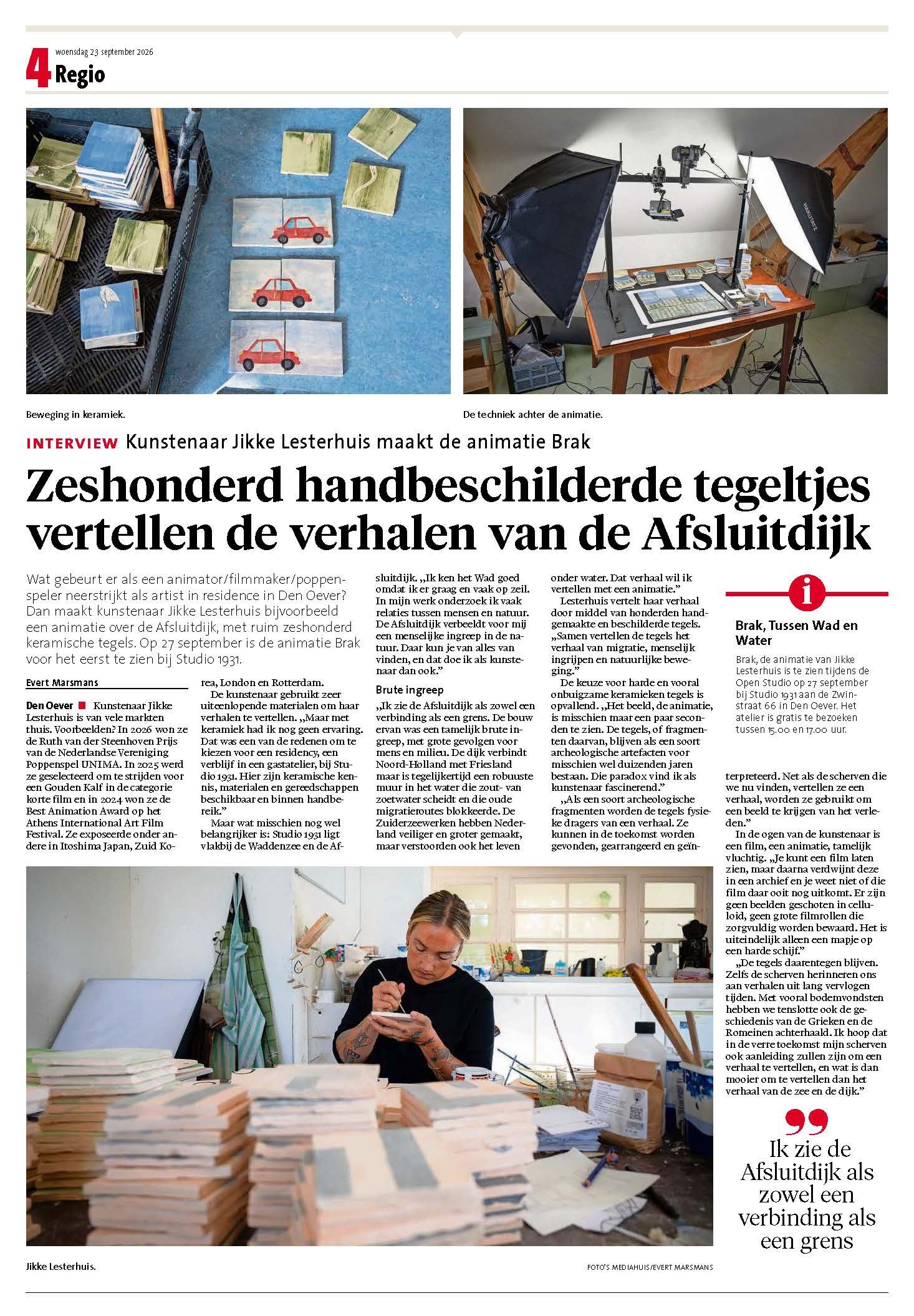
Developed during the Tussen Wad en Water residency at Studio1931, Den Oever.
Photos taken by Sofia Maria
Logline
BRAK is an experimental ceramic animation about the Afsluitdijk as both a connection and a border, exploring the tension between human control and the natural urge to move.
Synopsis
In 1932, the Afsluitdijk separated the Zuiderzee from the Wadden Sea. While the dike connected two shores, underwater it created a barrier for migrating fish. Nearly a century later, the Fish Migration River creates a passage through this man-made boundary, allowing movement between salt and fresh water once again.
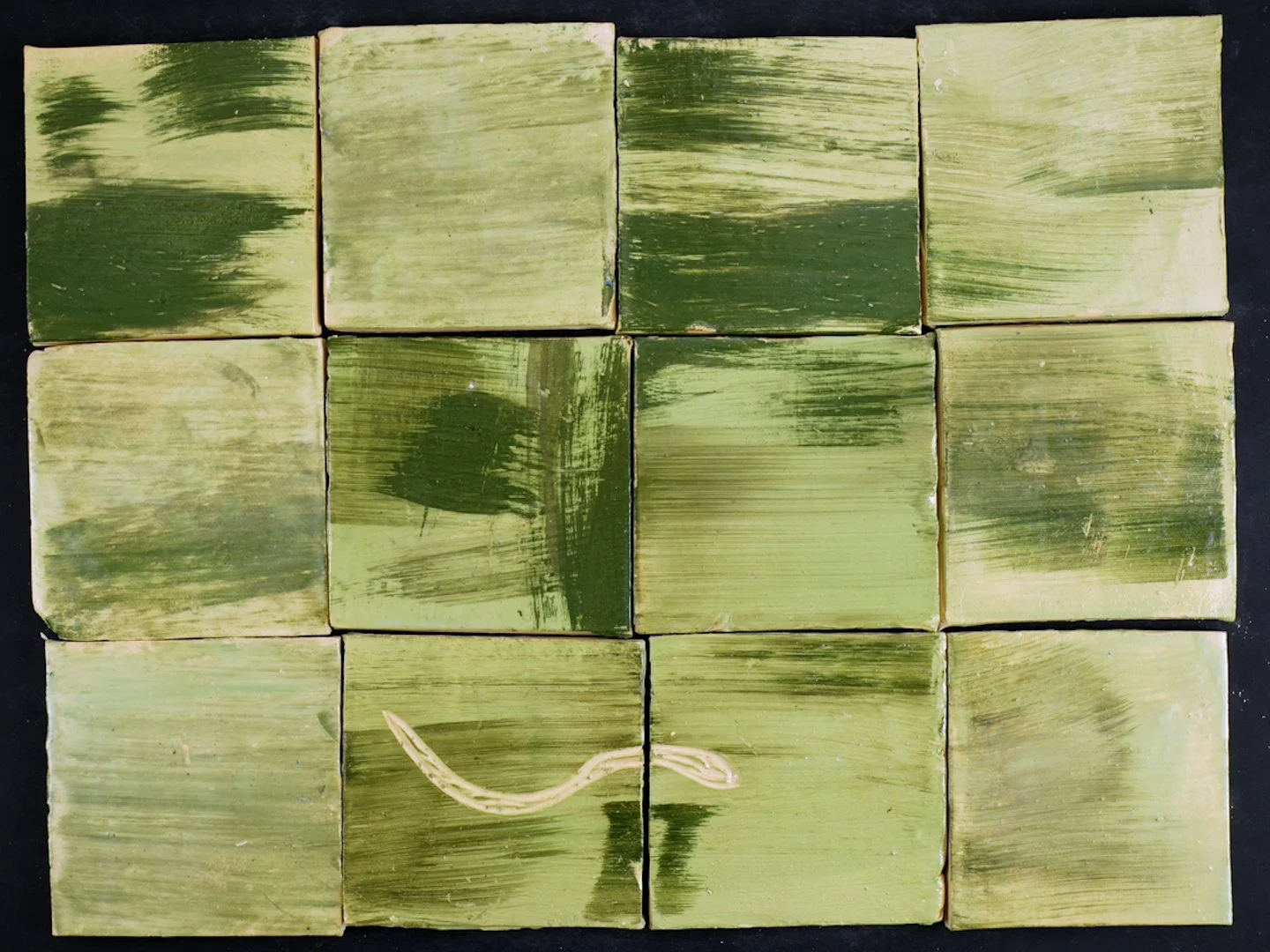
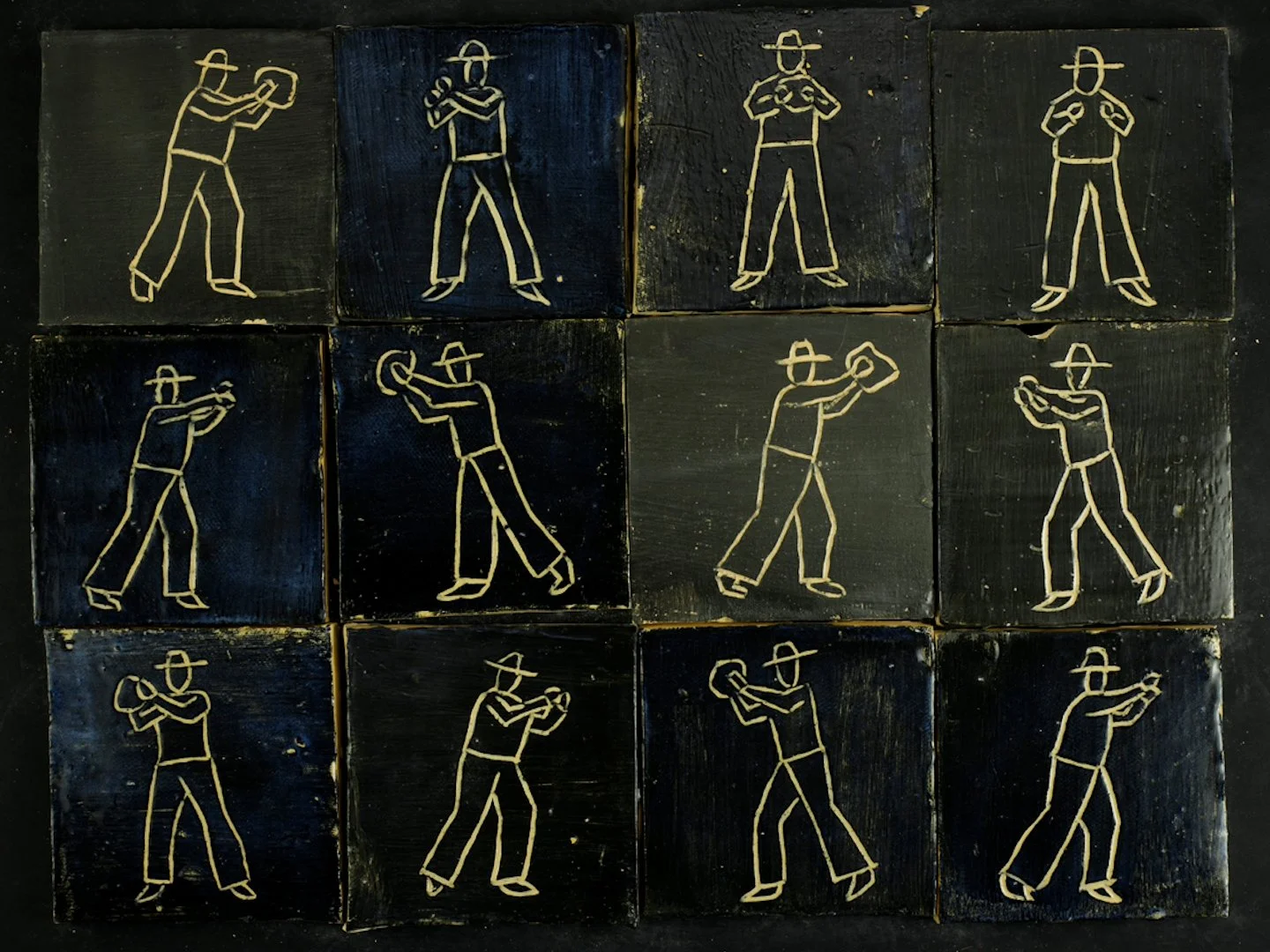
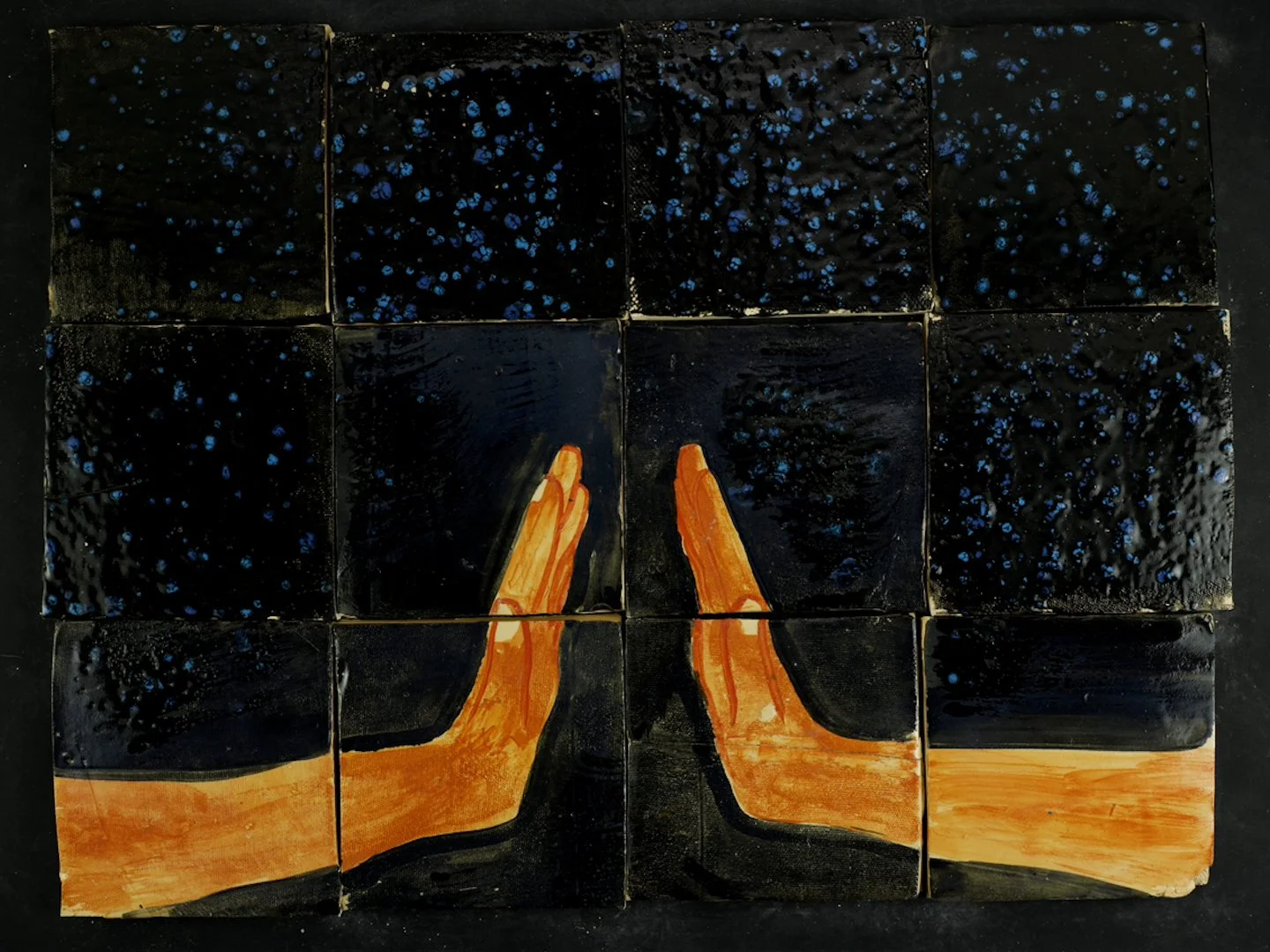
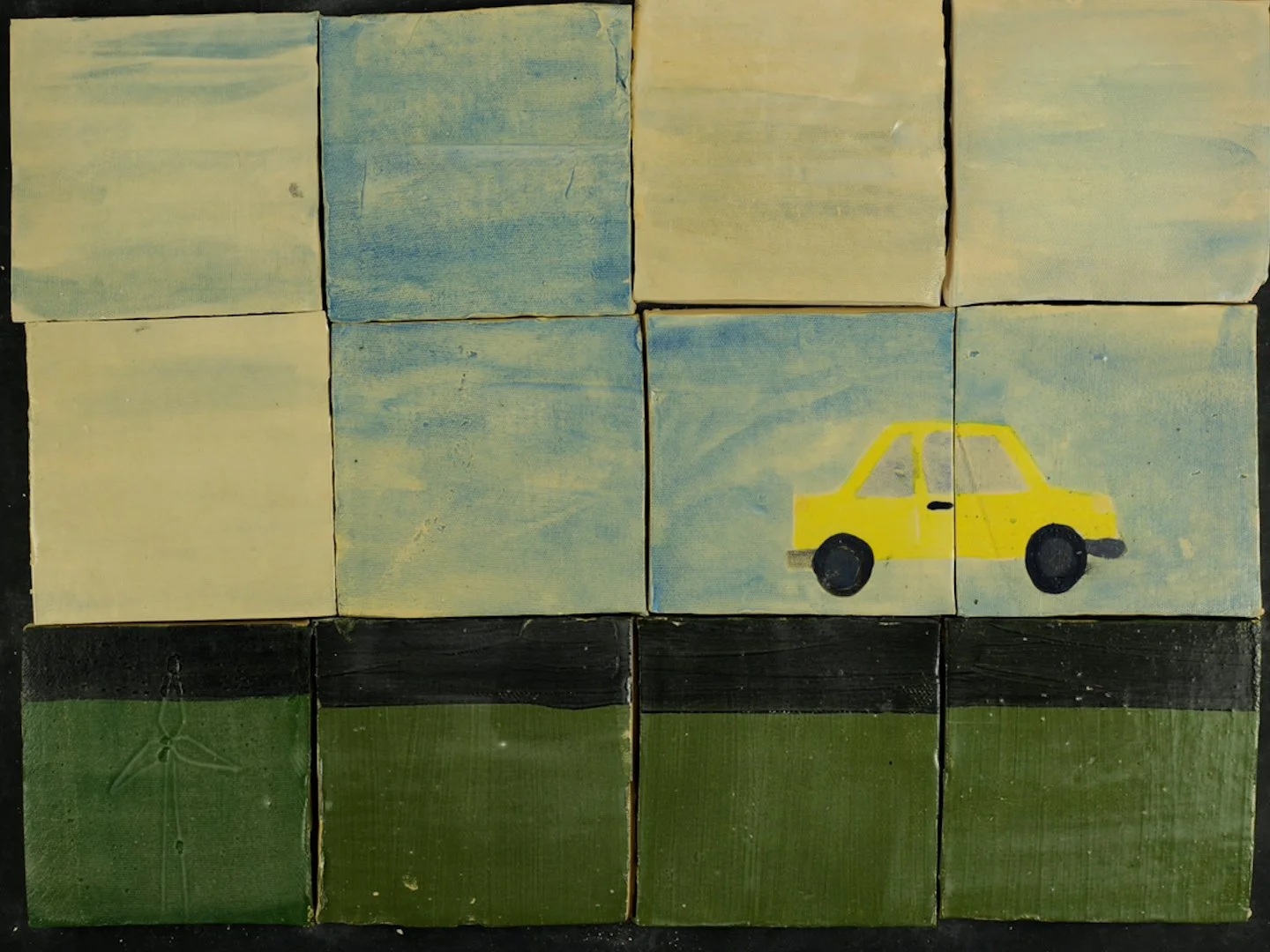
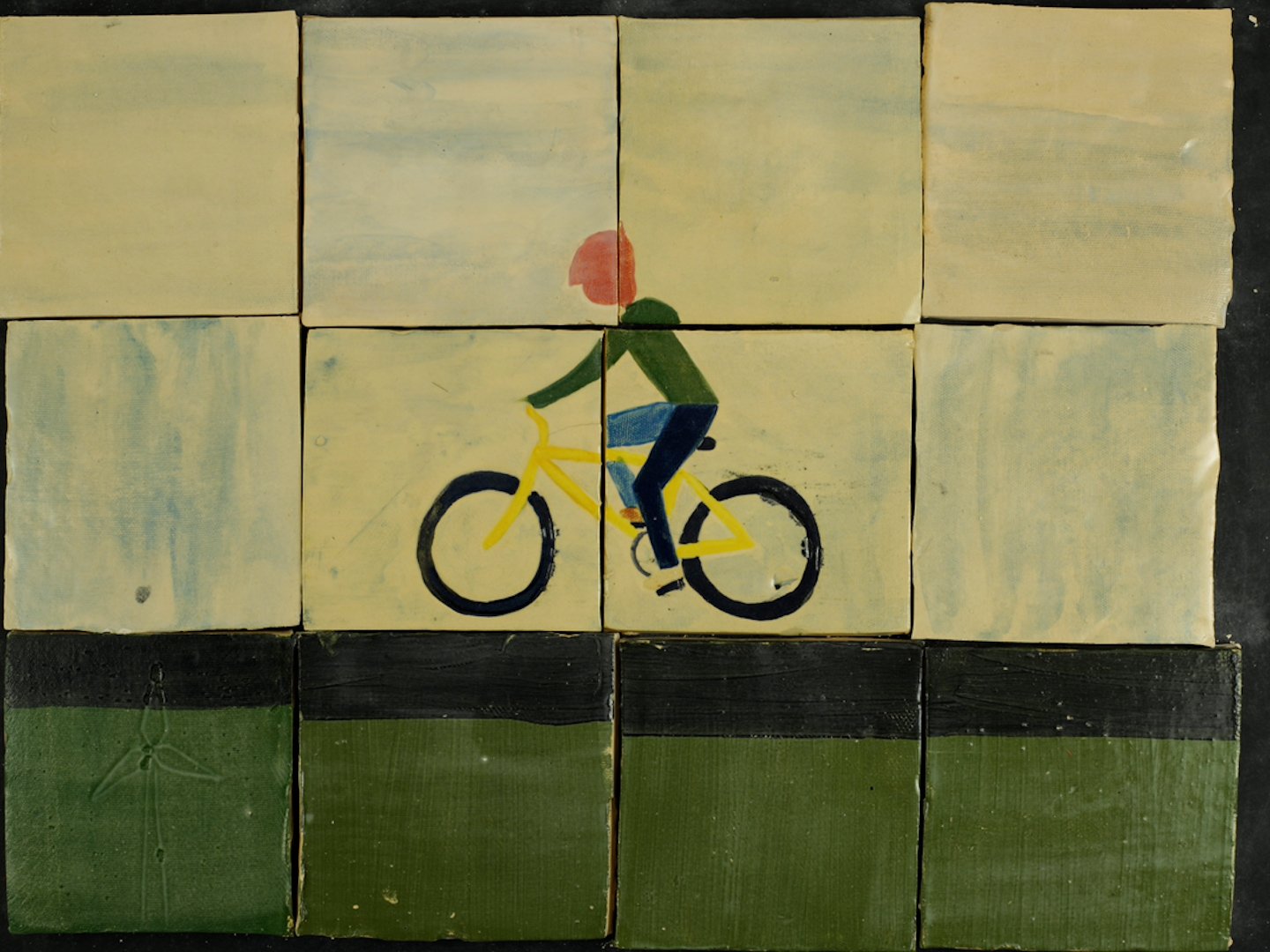
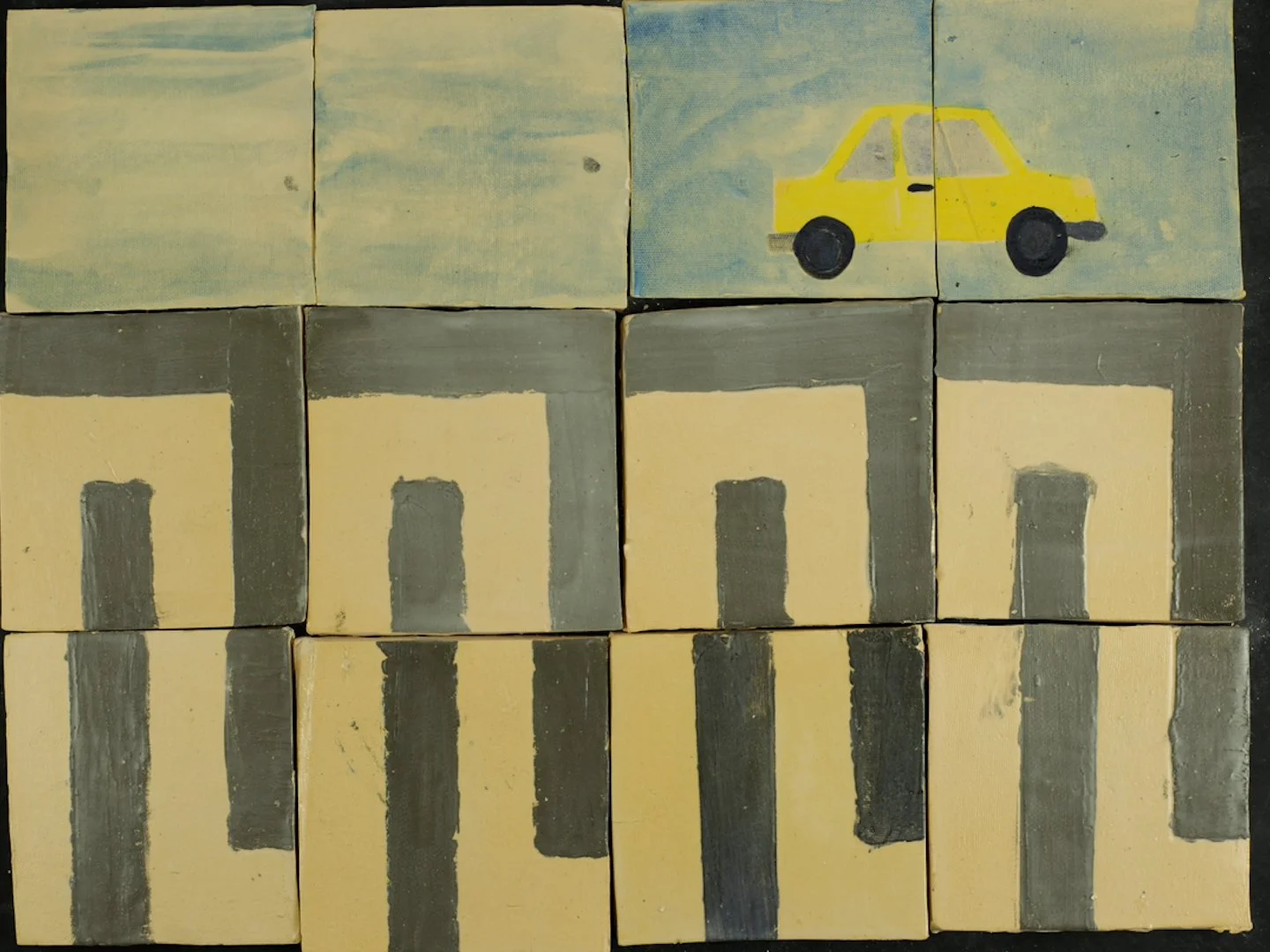
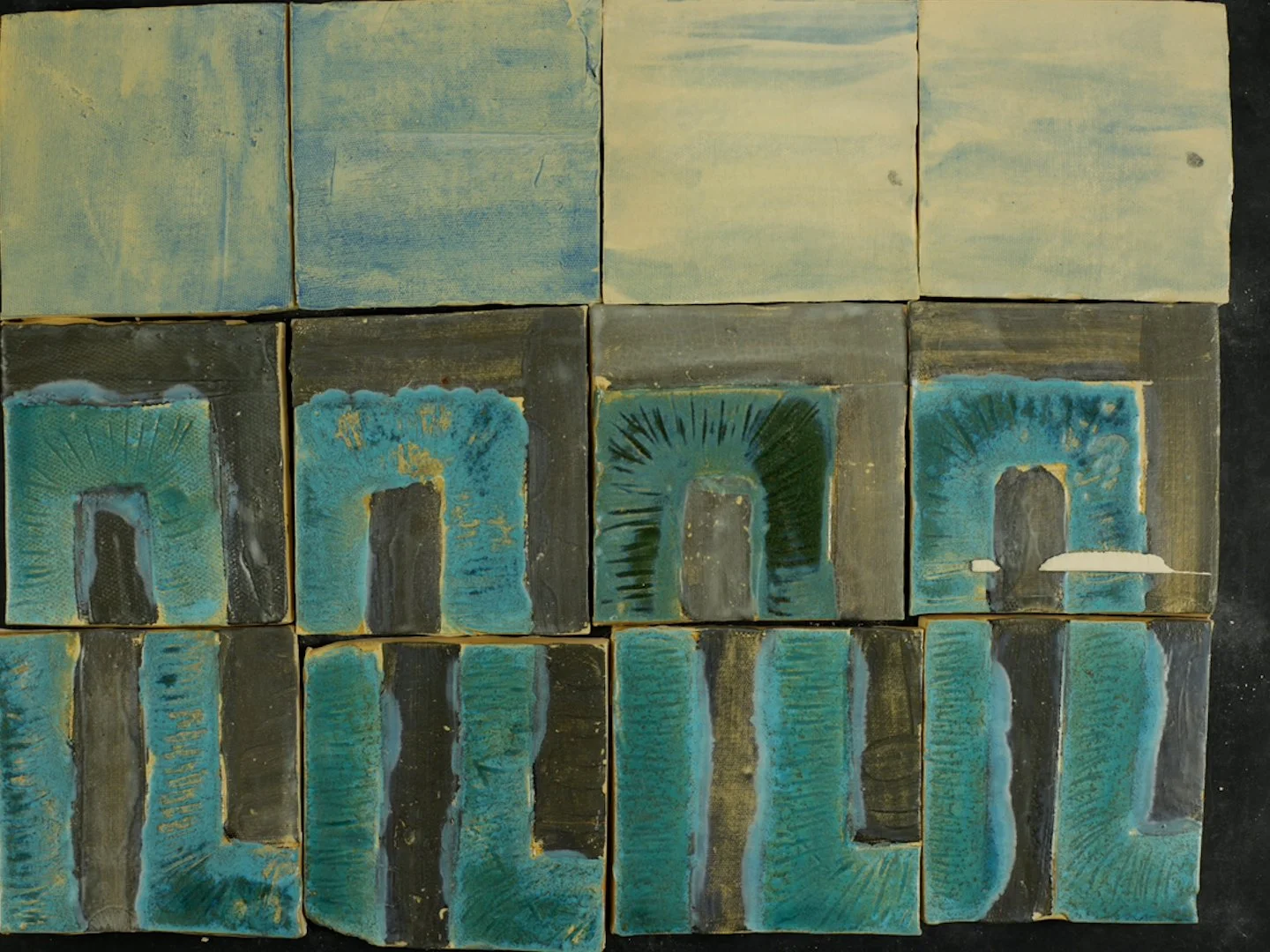
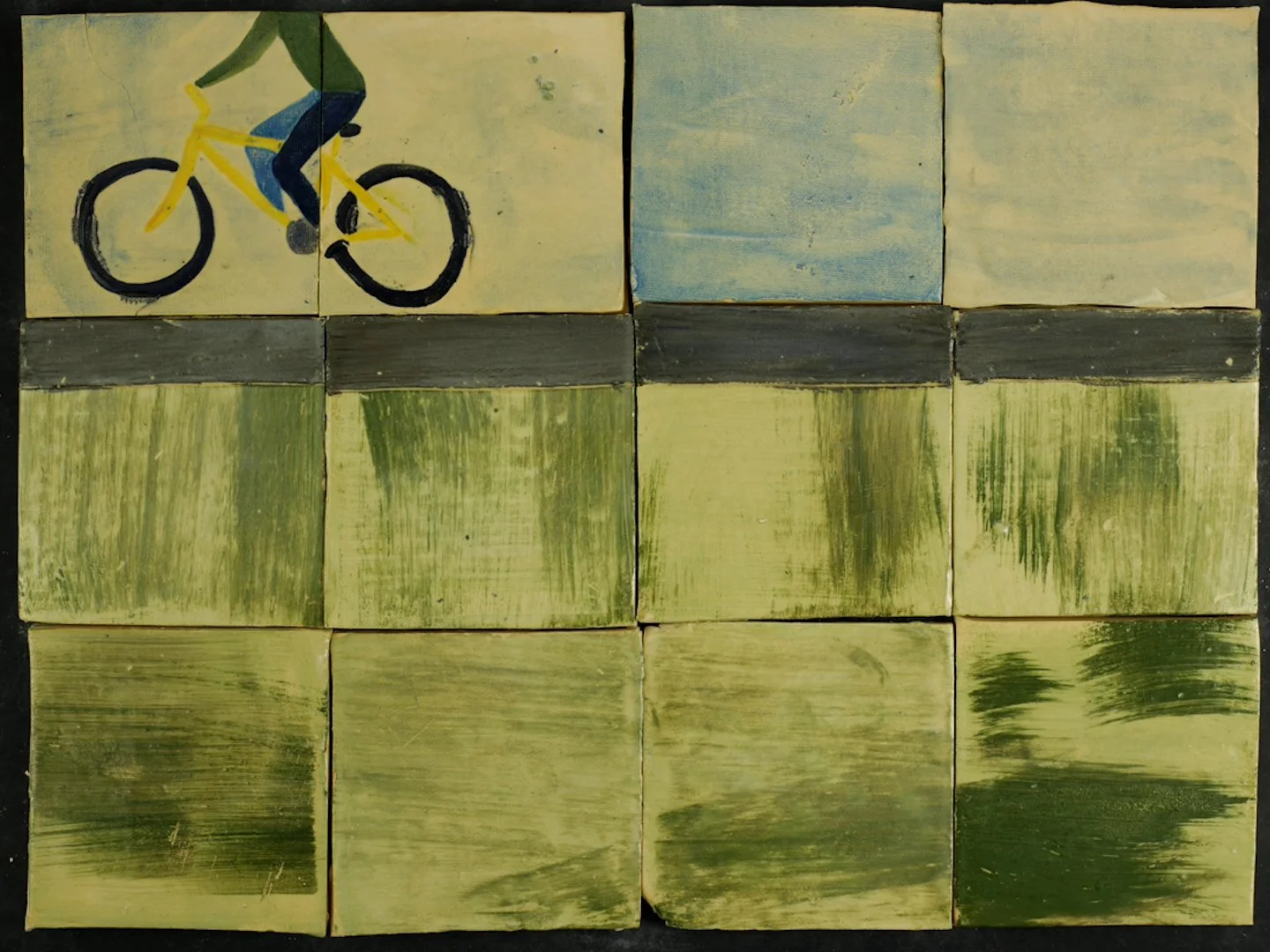
In BRAK, this changing landscape unfolds through a constantly shifting tableau of handmade ceramic tiles. Water turns into land, organic movement into straight lines and grids, until cracks and meandering forms slowly find their way through again.
Lines, borders and movement
At the heart of BRAK is the line. The straight line of the Afsluitdijk cuts through a landscape that was never static: water flows, tides shift and animals migrate between salt and fresh water.
For humans, this line created safety and connection. For other species, the same line became a border. Throughout the film, straight lines, grids and geometric patterns represent our attempt to organise and control the landscape, while waves, fish and meandering forms continuously move across and between them.
The Fish Migration River does not erase the border. Instead, it creates movement within it. BRAK looks at this tension between separating and reconnecting, fixing and flowing, control and adaptation.
Ceramic as a physical archive
The choice to work with ceramics grew from research into the former Zuiderzee. In museum collections, I became fascinated by old tiles and ceramic fragments that have survived for centuries. Even when their original context has disappeared, these fragments continue to carry images and traces of another time.
This durability stands in contrast to animation, where an image exists only briefly before being replaced by the next.
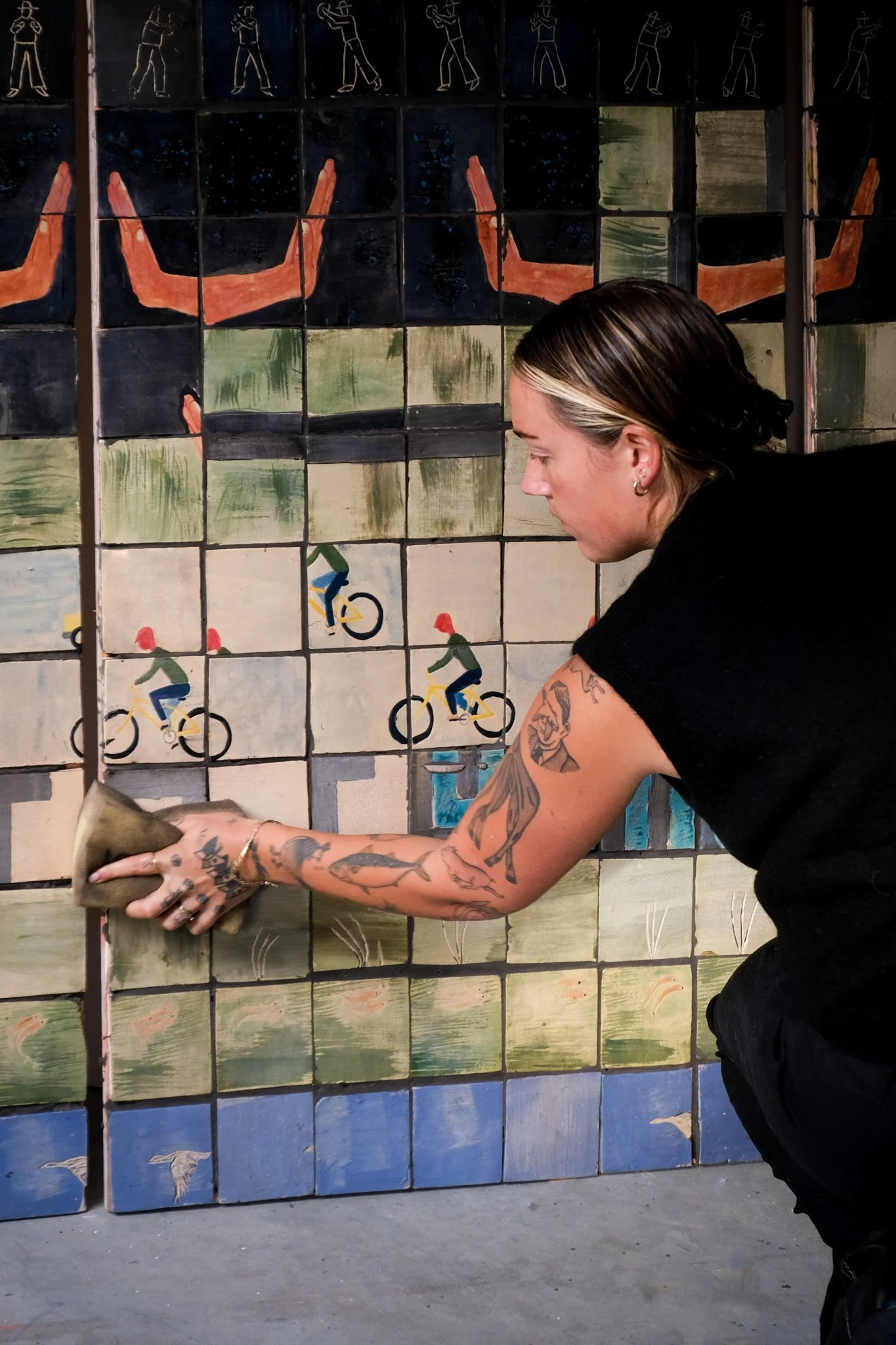
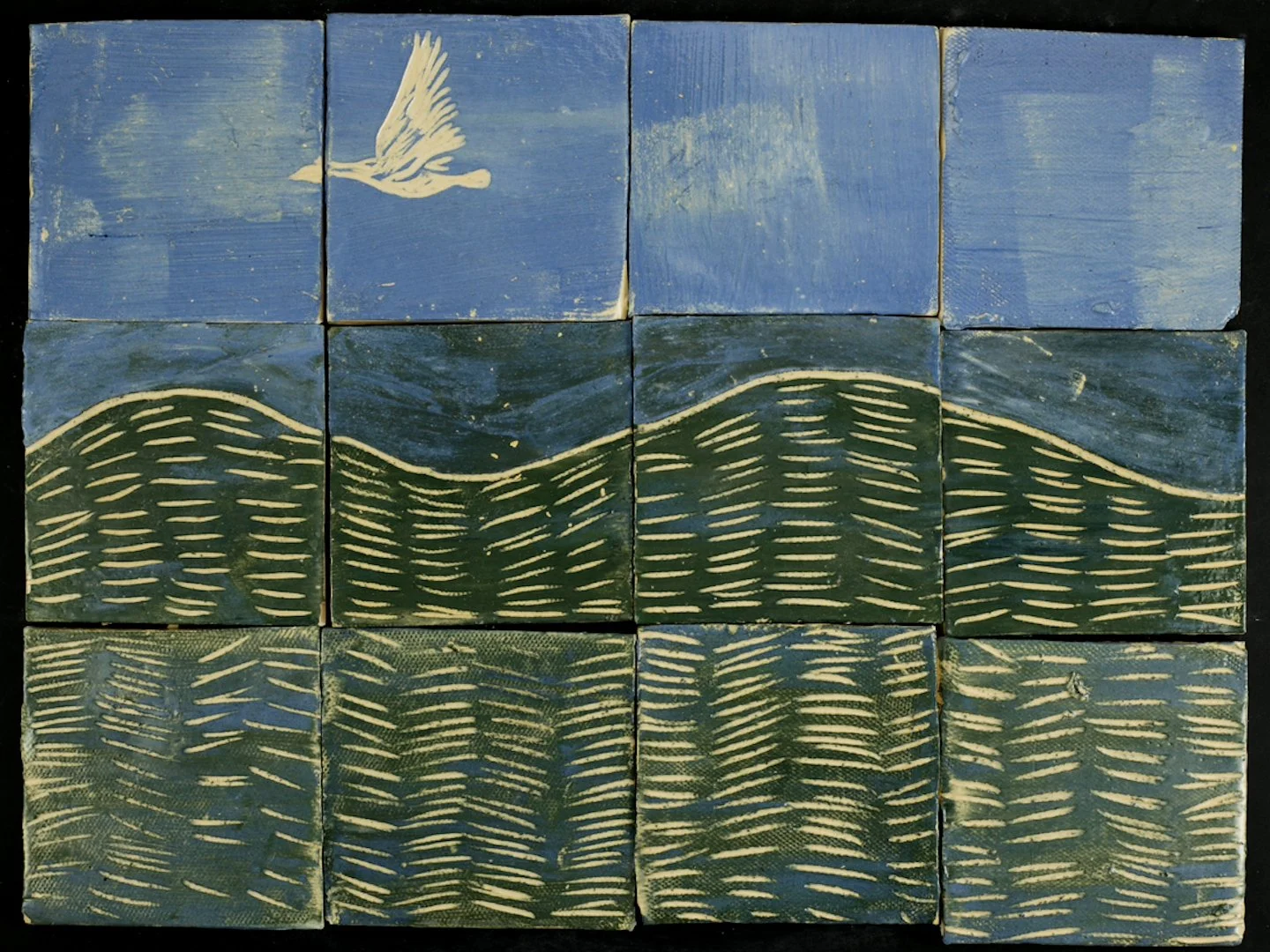
For BRAK, I created hundreds of individual ceramic tiles. During the animation, twelve tiles form a single image. By replacing, shifting and rearranging them frame by frame, a static and permanent material is brought into motion.
There is a parallel here with the landscape itself: soft clay is shaped and fixed by fire, while a dynamic water system was fixed by the construction of the Afsluitdijk. Through animation the ceramic begins to move again, just as the Fish Migration River creates new movement within the fixed structure of the dike.
Film & tableau
BRAK exists as both a 3:55-minute animation film and a 180 × 260 cm ceramic tableau.
After filming, the tiles do not disappear. They are brought together again in a large physical composition containing fragments from different moments in the animation. Images that existed for only fractions of a second in the film become permanent objects.
The tableau functions as a physical archive of the animation: a record of a landscape in transformation. Removed from their original sequence, the tiles can be read again in new relationships, perhaps like archaeological fragments whose original story can only partly be reconstructed.